Restoring the Lost Smartness
This client’s parents came to me with a serious concern.
“He doesn’t behave like an adult. He’s very childlike — too innocent, timid, and mild. We fear he won’t survive in the competitive world outside.”
He was in his early 20s — physically fit, well built, and healthy.
Yet, the moment he walked in, I could clearly sense the child in him.
Blank stares.
Zoning out while being spoken to.
Sitting on the chair exactly like a 10–12-year-old.
Curious questions — but little attention to the answers.
Adult Presence
In therapy, we often speak about Adult Presence.
Simply put, if a person is 20 years old, the 20-year-old mind should be fully present and in charge of the body.
When adult presence is intact, behaviour aligns with age, decisions are clearer, and life feels manageable.
Much of therapeutic work is about restoring this presence — reducing the grip of past experiences and fragmented consciousness.
Bringing the adult back in him felt challenging, yet I agreed to work because he was clear about one thing:
“I want to be as smart and wise as others my age.”
That clarity itself was proof — the adult was present, just not consistently accessible.
The Body Remembers
As sessions unfolded, a childhood incident emerged.
He had nearly drowned.
The fear was overwhelming.
He froze and lost consciousness.
In moments of extreme threat, it’s common to energetically step out of the body — a freeze or numbing response.
Sometimes, a part of that consciousness does not fully return, leading to a subtle but lasting loss of bodily presence.
Integration and Change
With gentle and consistent work, his presence gradually strengthened.
His posture shifted.
His responses became firmer.
His tone matured.
Clarity replaced confusion.
The child-like patterns slowly gave way to an adult mode of being.
He said,“I feel my smartness is coming back. I feel normal now — like others.”
We worked through deeper layers of inner child healing and regression where required, and eventually concluded the therapy.
Where He Is Today
Today, he is confidently engaged in his profession, living independently with friends, away from home — and grounded in himself.
The Real Insight
Childish behaviour is not always a lack of responsibility or willingness.
Sometimes, it is simply:
lost presence
unresolved trauma
parts of consciousness stuck in the past
and a lack of awareness that something is missing
A Question for You
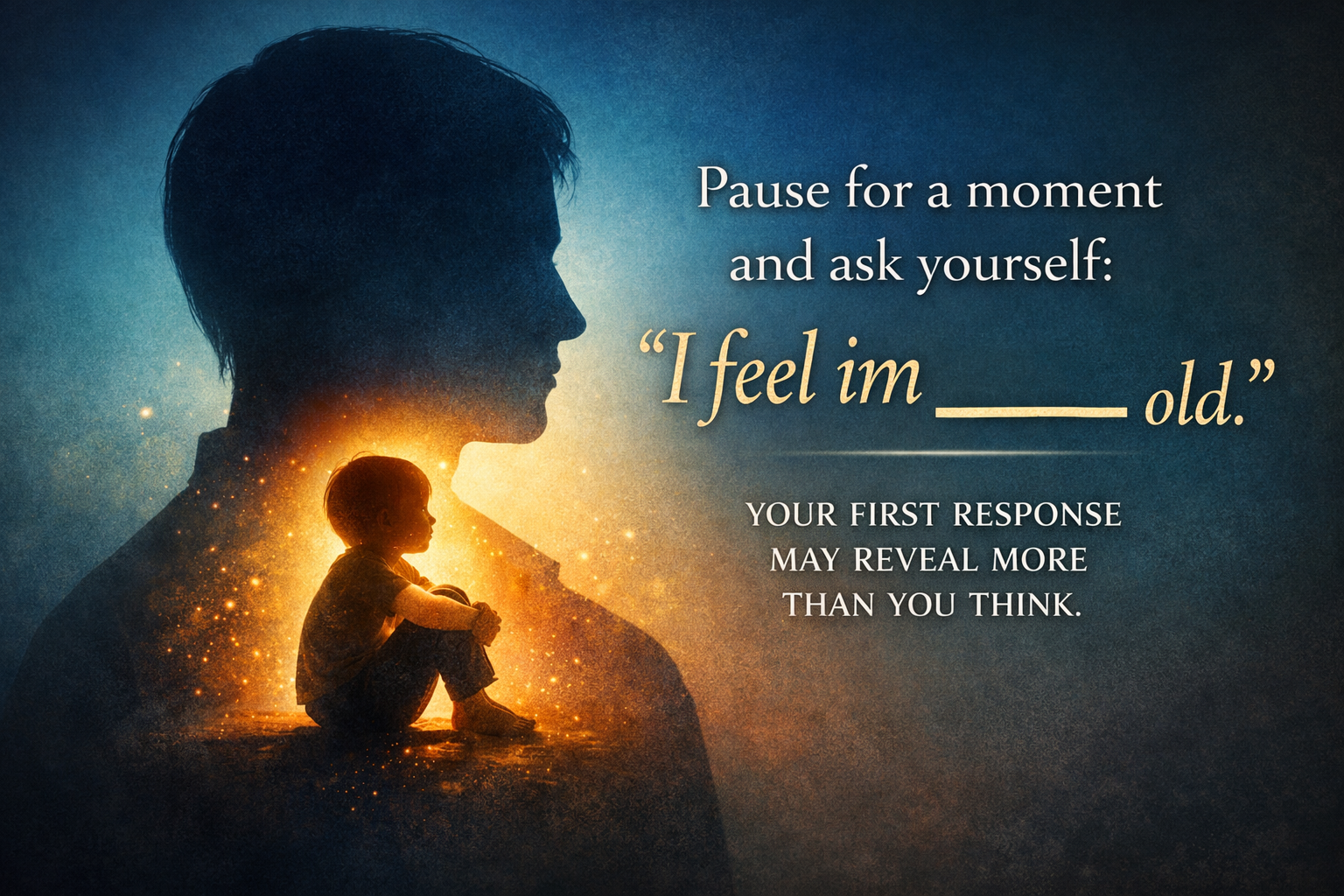
Pause for a moment and respond instinctively:
“I feel I’m ___ years old.”
Your first answer may reveal more than you expect.