When Targets Start Chasing You
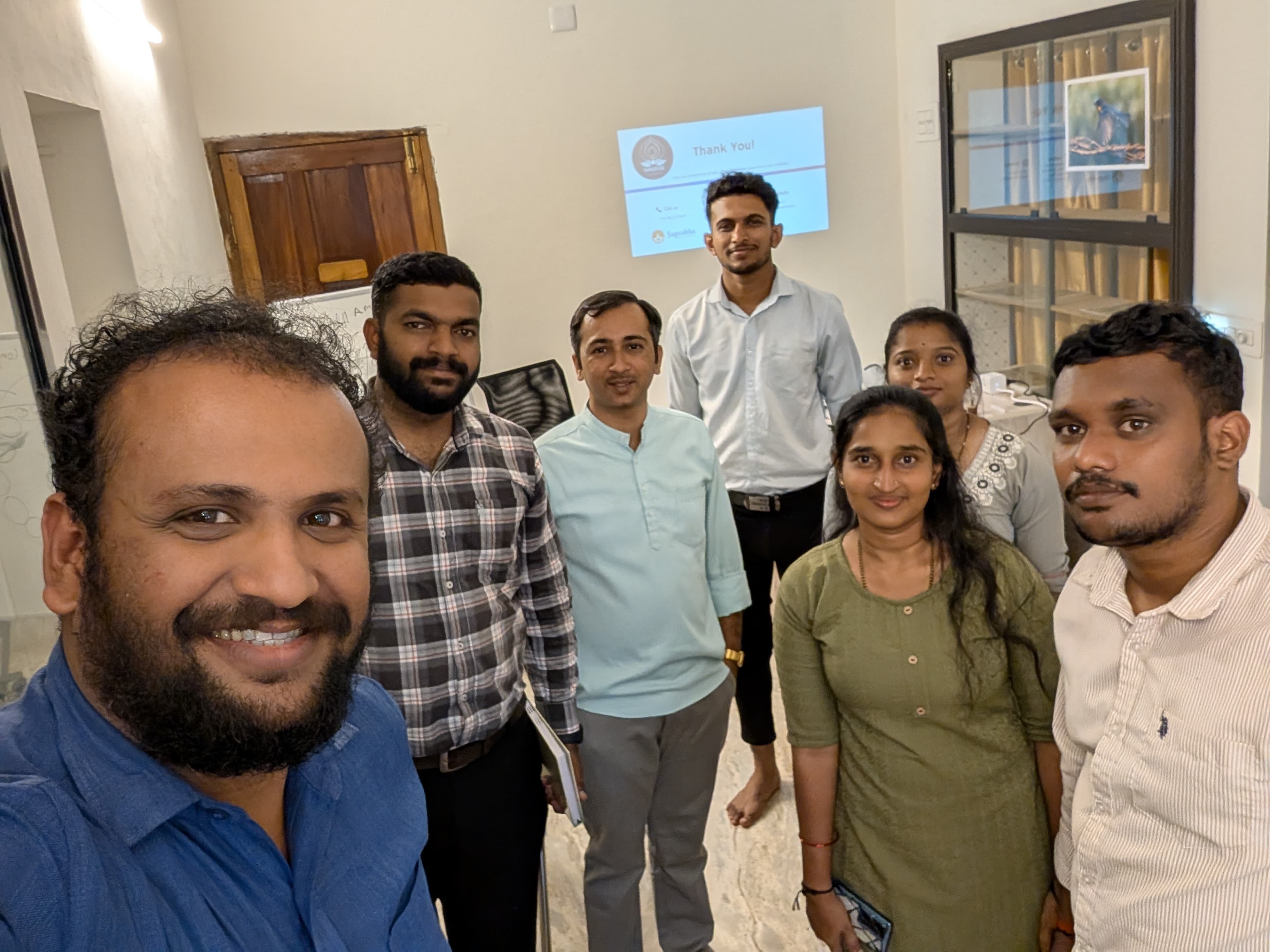
A few days ago, I conducted a workshop on emotional well-being and restoring confidence with a group of young marketing professionals from the insurance sector.
Marketing plays a crucial role in bringing growth and stability to any business. In the early years, professionals actively chase targets.
Over time, however, something subtly shifts — the targets begin to chase them.
When targets turn into constant pressure, fear of failure, repeated rejection, and unprocessed frustration, mental health slowly starts taking a hit.
If left unattended, physical health soon follows.
Most participants in this workshop were in the early stages of their marketing careers, so the usual challenges were naturally present.
In this profession, self-esteem, communication skills, body language, tone, and the ability to assess prospects play a key role in success.
Yet many of these capacities get compromised when unresolved childhood experiences resurface — especially in moments of judgment, rejection, or pressure to deliver outcomes.
At times, fear overpowers confidence.
Conversations don’t begin.
Prospects are misread.
Deals don’t close.
Not always because of lack of skill — but because of internal blocks.
This leads to a familiar cycle:
frustration,
stress,
anxiety,
and sometimes even depression.
It could be a wrong assessment of a client.
It could be fear of initiating a conversation.
It could even be fear of success — or fear of failure.
We spent nearly 5–6 hours exploring the emotional dimensions of their professional journey.
Through reflective discussions, real-life applications of psychological patterns, and experiential processes, we worked on managing fear and nervousness, becoming less judgmental toward oneself and others, and reconnecting with a more confident, grounded version of the self.
At the beginning of the session, it was clear that participants didn’t quite know what to expect.
Many had never experienced a therapist facilitating a workshop to address challenges around targets and performance.
As the session progressed, participants were exposed to a deeper understanding of how the subconscious silently drives behaviour and patterns — often without awareness.
Perhaps my experience as an entrepreneur, and my work with marketing teams and corporate professionals in multiple roles over nearly two decades, contributed to understanding their pain points and offering practical tools to navigate these challenges.
By the end of the session, the room went quiet.
No one spoke.
When mental clutter clears — when constant churning, fear, and stress release — we naturally move into a calmer, more settled state.
That silence wasn’t emptiness.
It was presence.
A subtle yet powerful inner shift.
In such moments, there’s nothing to say or do — only to be.
For me, that silence was an indication that something had shifted deeply, even if participants weren’t yet consciously aware of it.
I trust that in the coming days, as they integrate the experience, they’ll feel more confident, lighter, and aligned in their own ways.
That’s what healing looks like.
Subtle.
Personal.
Transformational.
Grateful for the opportunity. 🌱